

Is Back Pain Interfering With Your Everyday Life
Here’s How One of Our Patients Got Back to the Things He Loved the Most
The chances are very good that you’ll experience back pain at some point in your life. You might lift a piece of furniture that’s a little too heavy for you. You might develop pain from prolonged sitting. Or you might just notice a “random” back pain that likely stems from repetitive or awkward movements.
No matter the source of your back pain, physical therapy with The Fitness Lab can help you find relief. We know that when you’re in the throes of debilitating pain, pinpointing the underlying cause is probably the least of your concerns. But to our team of experts, understanding the cause is the first step in helping you get the treatment you need.
To illustrate this, let’s look at a story from our files. Daniel developed back pain that was dramatically impacting his day-to-day life. It kept him on the couch during the day and wide awake at night–but our therapists helped him find lasting relief.
Meet the Patient (And His Back Pain)
Daniel was a computer programmer in his late 30s who spent his workday tapping away on his computer keyboard. In his spare time, he enjoyed playing board games with his buddies, taking his German shepherd to the dog park, and whipping up meals for his girlfriend.
One day, Daniel was digging out a dead shrub in his backyard when he felt a sudden spasm in his lower back, followed by a sharp jolt of pain. He stopped for the afternoon, but the pain hadn’t receded the next day. Or the next.
Daniel’s back pain was intense enough that it didn’t just cause pain; it also impacted his mobility. Forget digging out a shrub; now, Daniel could barely walk his dog! And while the pain lessened somewhat while he was sitting, it was still bothersome enough to distract him from work.
Enough’s Enough: Daniel Visits a Physical Therapist
Eventually, Daniel’s girlfriend told him he needed to seek treatment. She suggested he try a physical therapist, as she’d had a good experience with physical therapy after her own back injury.
At the PT clinic, Daniel shared his symptoms and noted that the pain had started while he was doing yard work. His therapist also guided him through several movement screens, testing Daniel’s range of motion and strength.
By the end of the appointment, Daniel’s therapist had determined that Daniel likely had an issue with his lumbar discs (the cushions found between vertebrae) from digging out the tree root; he’d twisted his body while lifting a heavy clump of dirt, damaging his discs.
However, part of the reason Daniel suffered the injury was because the muscles in his back and core were weakened due to his sedentary job. Without strong core muscles to support his spine, he was more susceptible to an injury, particularly when performing manual labor without any conditioning or warmup.
A Personalized Treatment Approach
Daniel’s physical therapist didn’t want to just mask Daniel’s symptoms. He wanted to resolve the underlying injury and help Daniel prevent future injuries. To accomplish this, he created a customized treatment plan that walked Daniel through the following steps:
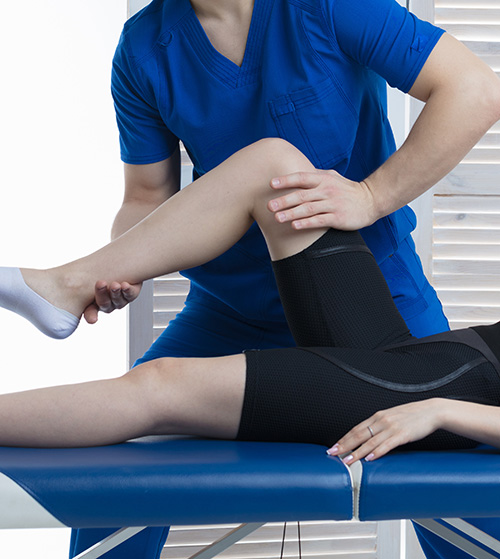
- Relieve acute pain: Manual therapy techniques like back mobilization and soft tissue manipulation offered an all-natural alternative to pain medication.
- Restore mobility and build strength: A therapeutic exercise program helps address the underlying muscular weakness that set Daniel up for an injury in the first place. By building up the strength in his back and core, Daniel was able to provide more stability and support to his spine.
- Address lifestyle factors: Another factor in Daniel’s injury was his sedentary job. His physical therapist offered suggestions to help offset the prolonged sitting involved in computer programming, including taking stretching breaks every 30 minutes and investing in a standing desk.
- Prevent another injury: Finally, the therapist showed Daniel how to use proper technique when working in the yard and suggested some warm-up methods the next time Daniel needed to perform strenuous movements.

Say Goodbye to Back Pain Today!
Does Daniel’s story resonate with you? Just like him, you don’t have to suffer! Schedule an initial consultation at The Fitness Lab to get started on the journey to lasting pain relief.
Patient Success Story
“The Fitness Lab has been AWESOME! I had a pretty weird issue going on with my knee and Tom took the time to dig into it with me. I really feel like he cares about my recovery and my ability to keep training for my goals! Fitness Lab — specifically Tom — are GREAT!” — Dana B.
Common Sports Injuries: A Guide to Physical Therapy Treatments

Playing sports is a great way to stay active and challenge yourself both physically and mentally. Unfortunately, there’s no way around it: playing sports also comes with the risk of injuries. But did you know about physical therapy for sports injuries? It offers effective solutions to help you recover quickly and get back to your favorite activities.
Sports injuries can happen to anyone, whether you’re a professional athlete or a weekend warrior. From sprained ankles to pulled muscles, these injuries can land you on the sidelines and disrupt your training routine.
Physical therapy at The Fitness Lab is essential in treating these injuries. We offer targeted, personalized rehabilitation programs that will help you recover from one injury while helping to prevent another one in the future. Through a combination of manual therapy, mobility work, strength training, and more, physical therapy for sports injuries will help restore your function and improve your overall performance.
Today, we want to explore some of the more common sports injuries and what physical therapy can do to treat them. By learning the signs and symptoms of these conditions, you can seek treatment with The Fitness Lab as soon as possible, helping get you back in the game much earlier.
Sprained Ankle: One of the Most Common Sports Injuries
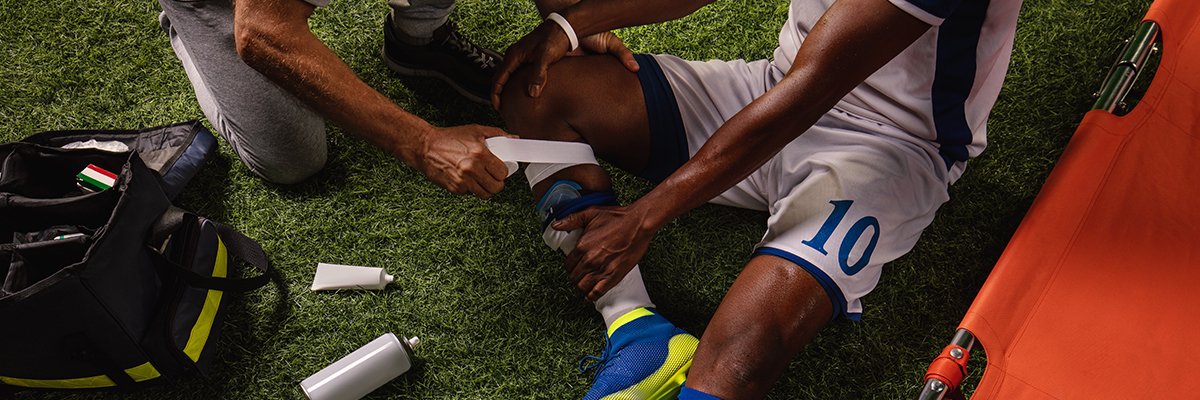
Ankle sprains are among the most prevalent sports injuries. They occur when you force your ankle too far out of its normal range of motion (such as during a fall), damaging the ligaments in your ankle joint. A mild ankle sprain might cause slight pain that fades after a few days. More severe ankle sprains can cause more intense pain, swelling, and instability.
If you suffer a sprained ankle — even a mild one — it’s a good idea to visit our physical therapists. Spraining your ankle once makes you much more likely to sprain it again. Rehabilitating with one of our experts can help reduce that likelihood through targeted exercises to strengthen and stabilize your ankle.
Runner’s Knee: This Sports Injury Doesn’t Just Affect Runners!
As the name might suggest, this condition is common among runners, although it can affect anyone who jumps into an intense new training routine. It occurs when the cartilage under the kneecap becomes irritated, causing a dull, aching pain around the front of the knee, particularly when going up or down stairs, squatting, or sitting with bent knees for extended periods.
Physical therapy for runner’s knee focuses on alleviating pain and addressing the underlying causes of the condition — whether that’s an awkward running gait, muscular weaknesses in the leg, or something else. We’ll develop a personalized treatment program emphasizing targeted strengthening exercises and activity modifications. We can also help address acute pain through manual therapy or pain-relieving modalities.
Rotator Cuff Sports Injuries: Why Physical Therapy is Essential
The rotator cuff comprises four muscles and their tendons that stabilize the shoulder joint and help you perform various shoulder movements. Injury to any part of the rotator cuff can lead to a dull ache deep in the shoulder, shoulder and arm weakness, and difficulty lifting the arm or performing specific movements.
Rotator cuff injuries are especially prevalent in athletes who perform repetitive overhead motions, such as baseball players, tennis players, and swimmers. Many rotator cuff injuries are overuse injuries, which develop gradually over time. However, you can also damage your rotator cuff through an acute injury, like a fall.
Treatment for a rotator will vary based on the severity of your injury. However, with mild to moderate injuries, physical therapy alone is generally enough to get you back in the game. If you do need to undergo a rotator cuff repair surgery, we’re here to rehabilitate you afterward. We’ll use manual therapy, therapeutic exercise, and functional training to address your injury.
Suffered A Sports Injury? Don’t Skip on Physical Therapy
Ankle sprains, runner’s knee, and rotator cuff injuries aren’t the only ways athletes can injure themselves. Shin splints, muscle strains, Achilles tendinitis, and overuse injuries like tennis elbow or swimmer’s shoulder can cause significant pain and disability. And all can be addressed with physical therapy for sports injuries!
At The Fitness Lab, our team has extensive experience working with athletes and active people. We know you don’t want to give up your training and sports schedule — but it’s important to address even minor injuries before they bloom into something worse.
If you suspect you’ve suffered a sports injury, schedule an appointment at The Fitness Lab today to begin treatment.
Exercise of the Month
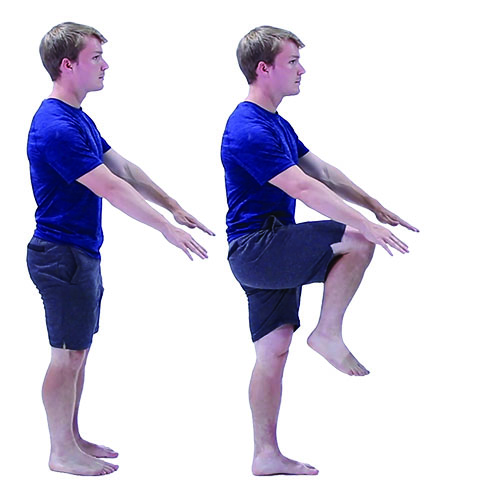
Standing March
Start by standing up straight (place both hands on the back of a chair for support if needed). Slowly lift one knee up towards the ceiling until it reaches hip height and then lower it back down. Do the same with the other leg keeping the abdominals contracted the whole time. Repeat exercise 10 times.


Fresh Corn Cakes with
Summer Salsa
This speedy vegetarian entrée is absolutely bursting with peak-season produce. We suggest serving the cakes with an herby white bean and arugula salad.
Combine flour, cornmeal, baking powder, 1/2 teaspoon salt, and 1/4 teaspoon pepper in a large bowl. Combine sour cream, eggs, and 1 tablespoon oil in a bowl, stirring until smooth. Add sour cream mixture, corn, and jalapeño to flour mixture; stir just until combined. Heat a large nonstick griddle over medium-high heat. Divide corn mixture into 8 equal portions (about 1/3 cup each); shape into patties. Add patties to griddle; cook 6 minutes on each side. Combine squash, green onions, basil, vinegar, tomato, remaining 1 tablespoon oil, remaining 1/4 teaspoon salt, and remaining 1/4 teaspoon pepper in a bowl; toss. Place 2 corn cakes on each of 4 plates; top evenly with salsa.
- ¾ cup white whole-wheat flour
- ½ cup plain yellow cornmeal
- 2 tsp baking powder
- ¾ tsp kosher salt
- ½ tsp black pepper
- 1 cup light sour cream
- 2 large eggs
- 2 tbsp olive oil
- 1 ¼ cups fresh corn kernels
- 2 tbsp minced jalapeño
- ½ cup diced yellow squash
- ¼ cup chopped green onions
- ¼ cup chopped basil
- 1 ½ tsp white wine vinegar
- 1 medium tomato, chopped
Meet Our Team
-

Dr. Bill Gregoire
Clinic Manager, PT, DPT -
Dr. Spencer Barnes
PT, DPT, OCS -
Dr. Alex Brateman
PT, DPT -
Dr. Alice M Davis
PT, DPT, OCS, FAAOMPT -
Dr. Allison Shane
PT, DPT, OCS, FAAOMPT -
Dianna Cole McNitt
PT, COMT -
Dr. Caroline Marnin
PT, DPT -
Dr. Colton Litle
PT, DPT -
Dr. Laike Damman
PT, DPT -
Dr. Connor Devin
PT, DPT