Knee injuries are some of the most common setbacks for athletes of all ages and levels. Whether you’re sprinting down a soccer field, landing a basketball jump, or cutting sharply during a football play, your knees are constantly absorbing force and guiding movement. That’s why understanding knee injury prevention in sports is essential for long-term performance and joint health.
At The Fitness Lab, physical therapists regularly help athletes reduce their risk of knee injuries through structured, research-supported training strategies. When movement quality, strength, and joint control toare addressed together, athletes can build resilience and avoid common pitfalls that lead to downtime and pain.
Why Are Knee Injuries So Common in Sports?
The knee is a complex joint that relies on balance from the muscles and joints above and below it, namely, the hips and ankles. It’s also responsible for transmitting force during dynamic movements like jumping, pivoting, and decelerating. Without proper strength, stability, and control, these demands can overload the ligaments, tendons, and cartilage in the knee.
Common sports-related knee injuries include:
- ACL (anterior cruciate ligament) tears
- Meniscus injuries
- Patellar tendinopathy (jumper’s knee)
- MCL (medial collateral ligament) sprains
- IT band syndrome
These injuries often stem from sudden changes in direction, poor landing mechanics, or muscle imbalances that place extra stress on the joint.
The Role of Physical Therapy in Injury Prevention
Physical therapy does more than treat injuries after they happen. It plays a crucial role in identifying movement inefficiencies and addressing them before they lead to damage. At The Fitness Lab, therapists use functional movement assessments to detect faulty patterns, mobility limitations, and muscle weaknesses.
Programs for knee injury prevention in sports typically include strategies to improve:
- Lower body strength (particularly hamstrings, glutes, and quadriceps)
- Neuromuscular control
- Core stability
- Landing and deceleration technique
- Flexibility and mobility in the hips and ankles
This targeted training not only reduces injury risk but also enhances performance, allowing athletes to move with more precision and less compensation.
Key Elements of Knee Injury Prevention in Sports
Here are essential components of a prevention program grounded in the principles of sports performance and physical therapy.
1. Strengthening the Posterior Chain
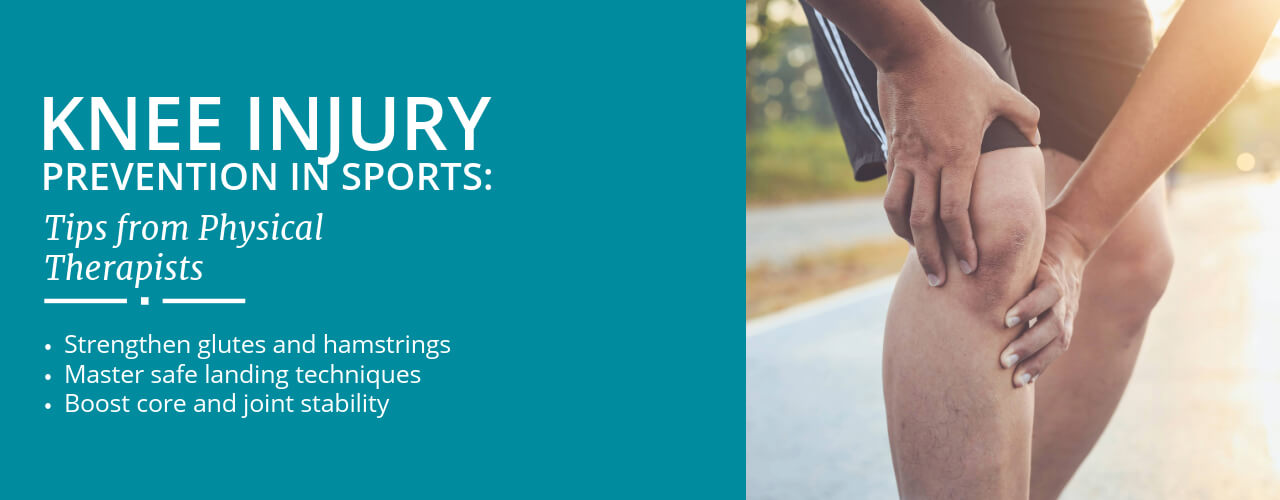
Many athletes are quad-dominant, which places more stress on the front of the knee. Strengthening the glutes and hamstrings helps distribute force more evenly and improves joint stability. Movements that engage the back of the leg contribute to balanced knee loading.
2. Teaching Proper Landing Mechanics
Improper landings like collapsing the knees inward can increase ACL injury risk. Physical therapists teach athletes how to absorb impact safely, using drills that focus on hip-knee-ankle alignment, muscle coordination, and awareness during jumping and cutting.
3. Improving Core Stability
A weak core allows excessive trunk movement, which can cause poor alignment of the lower limbs. Core training, particularly in dynamic movements, supports posture and stability through the entire kinetic chain, reducing strain on the knees.
4. Addressing Hip and Ankle Mobility
Limited mobility in the hips or ankles often forces the knee to compensate. Physical therapists use mobility drills to improve range of motion in these joints, giving the knee more support from the rest of the body.
5. Progressive Loading and Movement Control
Training plans at The Fitness Lab emphasize controlled strength and power development. Athletes progress from basic movement patterns to sport-specific drills that challenge balance, timing, and coordination.
Knee Injury Prevention Is a Long-Term Investment
Too often, injury prevention is only considered after something has already gone wrong. However, building protective habits early can reduce missed seasons, avoid surgery, and extend an athlete’s playing career.
By integrating knee injury prevention in sports into regular training, athletes develop a stronger foundation for every activity. Whether you’re a youth athlete or an adult returning to recreational sports, these skills improve not only how you move but how confidently you move.
Get Started with a Personalized Plan at The Fitness Lab
If you’re an athlete or parent looking to protect your knees and improve athletic performance, The Fitness Lab offers individualized programs designed by licensed physical therapists. Our team will assess your movement, identify key areas for improvement, and help you build a stronger, more resilient body.
Contact one of our Colorado physical therapy clinics located in Highlands Ranch, CO, Greenwood Village, CO, Parker, CO, or Denver, CO to schedule a performance assessment and learn how physical therapy can help with your sports goals and long-term knee health.